Writing about old family photographs
6 min read0 replies
In this story 6
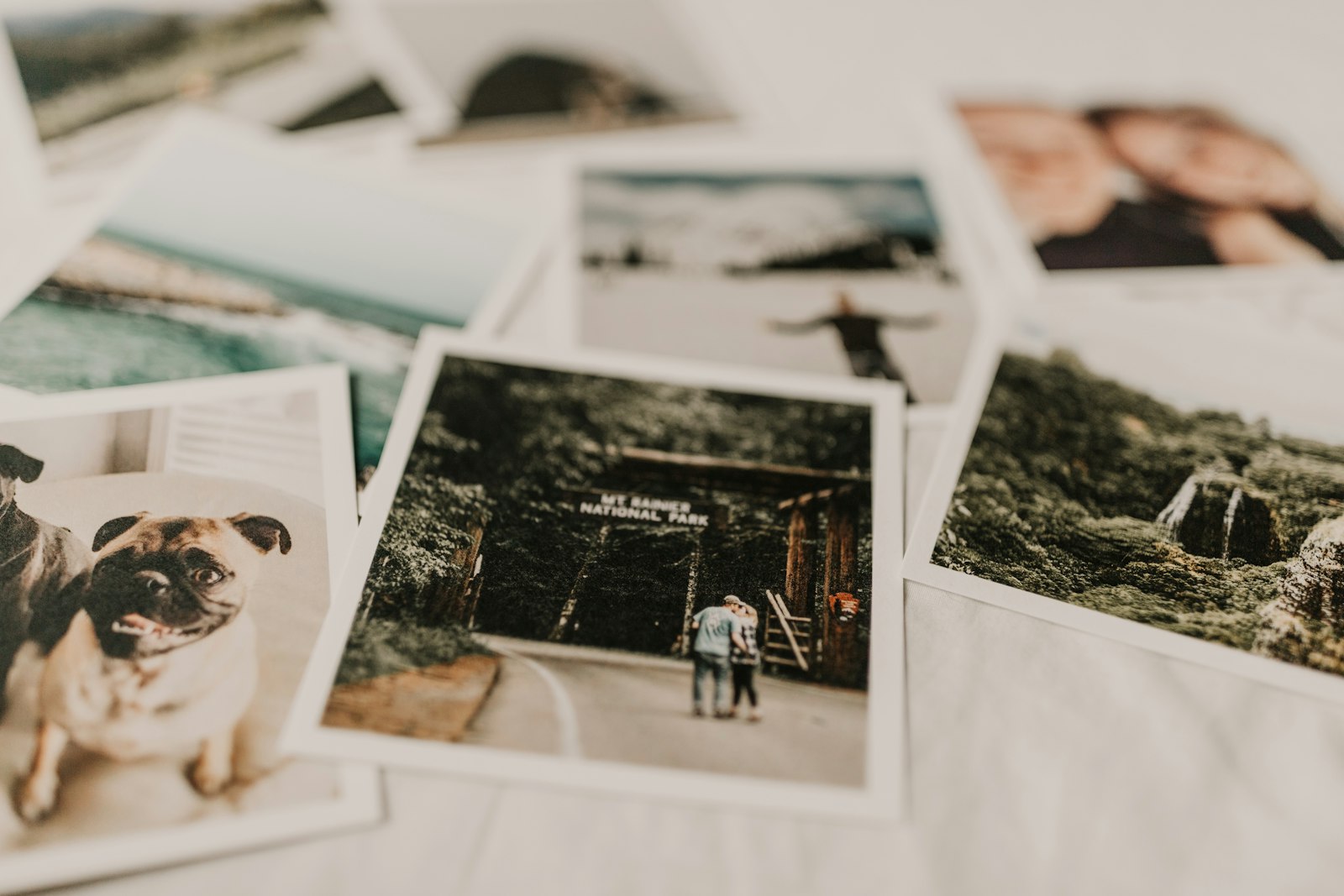
Somewhere in most families there is a shoebox. Inside it are small prints with white borders, a few stiff studio portraits, and a girl on a bicycle nobody can quite name. Those pictures make wonderful photo stories, and they are harder to write about honestly than anything you shot yourself. You were not there. Most of the people who were cannot be asked. And the ones who can be asked may remember it differently, or may not want it told.
These are the habits we would suggest before you post one. They come from the light table, so take what helps and leave the rest.
Sort what you know from what you guess
Before writing a line, take one photograph and a sheet of paper and make three short lists.
- Known: things the picture or a document shows. A name on the back in someone’s handwriting, a shop sign, a date on a letter kept with the print.
- Told: things a person has said. Note who said it and roughly when.
- Guessed: everything else, including your own favourite theory.
The lists feel fussy for about five minutes. Then you notice how much of the family legend sits in the third column, and how a story you have heard all your life has only one source.
Handwriting on the back deserves its own small doubt. It may have been added decades after the picture was taken, from memory. Treat it as good evidence, and report it as what the back of the print says.
Date it with a range, and show your working
Very few old family photographs come with a reliable date, so you will usually be building one from clues. Some of the better ones:
- The people you can place. If you know when a child was born, their apparent age gives you a window. It is often the strongest clue you have.
- The object in the print. Older formats such as the cabinet card belong to particular periods, and a studio stamp can sometimes be traced to a town and a business.
- Things in the frame. A car or a motorbike cannot appear before it was made. Neither can a building. These clues set the earliest possible date and say little about the latest.
- Clothes and hair. Helpful, but loose. Your grandmother may have worn the same good dress for a decade.
- A date printed in the margin. Often this records when the lab processed the roll. A film could sit in a camera through two birthdays before anyone finished it.
Then write the range and the reason together. “Around 1962, going by the size of the baby, who was born in 1961” is a better sentence than “1962,” and it reads better too. If a reader knows the motorbike was not sold until later, your working gives them something specific to correct.
Ask the family, and keep their words as theirs
If there are relatives who remember, take the print to them. Ask open questions, such as “Who do you think this is?” and “Where might this be?” “That’s Uncle Bảo in Huế, isn’t it?” is a question with its answer already inside, and a polite person may simply agree.
Write down what they say as closely as you can, with quotation marks around the exact words. The method in our note on keeping notes while you shoot works just as well for an afternoon with an elderly aunt: a time, a few real phrases, your own reaction in a word or two.
When two people disagree, resist choosing the better story. Suppose one sister says the picture was taken the summer before the family moved, and the other is sure it was the summer after. You can write exactly that, and the disagreement may turn out to be the most human line in the post.
Remember who is still alive
Old pictures feel safely in the past, but the arithmetic is worth doing. A six-year-old in a photograph from 1965 is in their sixties now and may well read what you post. The dead have living children, too.
Before publishing, try to ask anyone who appears in the picture and is still living, along with the closest relatives of people who are not. Some details are worth leaving out even with a friendly family:
- Addresses and house numbers, including one visible on a gate, if the family still lives there.
- Mothers’ maiden names and full birth dates, which are still used to confirm identity in many places.
- The private facts behind a picture: an illness, a divorce, a child given up, a stay in prison, a political past that could still cause trouble. You may know these things. Knowing them does not make them yours to tell.
Our guidelines ask writers not to publish other people’s private information, and they ask that you have the right to share the pictures you post. That second point can be murky: a print in your drawer may have been taken by a studio or a family friend, and the rules differ by country. If a relative asks you to take something down, do it first and talk about it afterwards.
You can often tell the story without the faces at all. Photograph the print lying on the table, the back with its pencil note, the rusty mark a paper clip left, a pair of hands holding the album open. Those frames make a fine sequence.
Write captions you could defend at a family dinner
Love makes people invent. It is very easy to write “Grandfather, proud and hopeful, on the day he opened the shop,” when all you truly have is a man standing in a doorway. We made a similar point about strangers in captioning street photos responsibly, and it applies with more force when the person is your own.
A plain caption has four parts: who, where, when, and how you know. Compare these two versions of the same imagined picture:
Grandfather, proud and hopeful, on the day he opened the shop.
A man my mother says is her father, in a shop doorway, probably in the late 1950s. The back of the print is blank. She remembers the shop, but not this day.
The second one has more in it. It holds a daughter, a gap and a blank piece of paper, and the reader can do their own feeling about the rest. If the picture moves you, say so in your own voice and own the reaction: “I keep looking at his hands.” That is true, because it is about you. “He was thinking of the journey ahead” belongs in a novel.
Do not be shy about plain ignorance. “We do not know who the woman on the left is” can be the sentence a reader remembers.
Leave the door open for corrections
An old photograph is one of the few subjects where publishing can improve your facts. Say what you are unsure of and invite answers. Replies on FernPrint are read by a moderator before they appear. You might also ask relatives to reach you privately, so that a cousin’s memory does not have to arrive in public.
When something new turns up, change the post and say that you changed it, in a line such as: “An earlier version of this caption placed the picture in Đà Lạt. My aunt recognised the steps; it was Nha Trang.”
Then put the print back in the box, with what you learned written on a slip of paper beside it. Someone will open that box after you, and they will have the same questions.